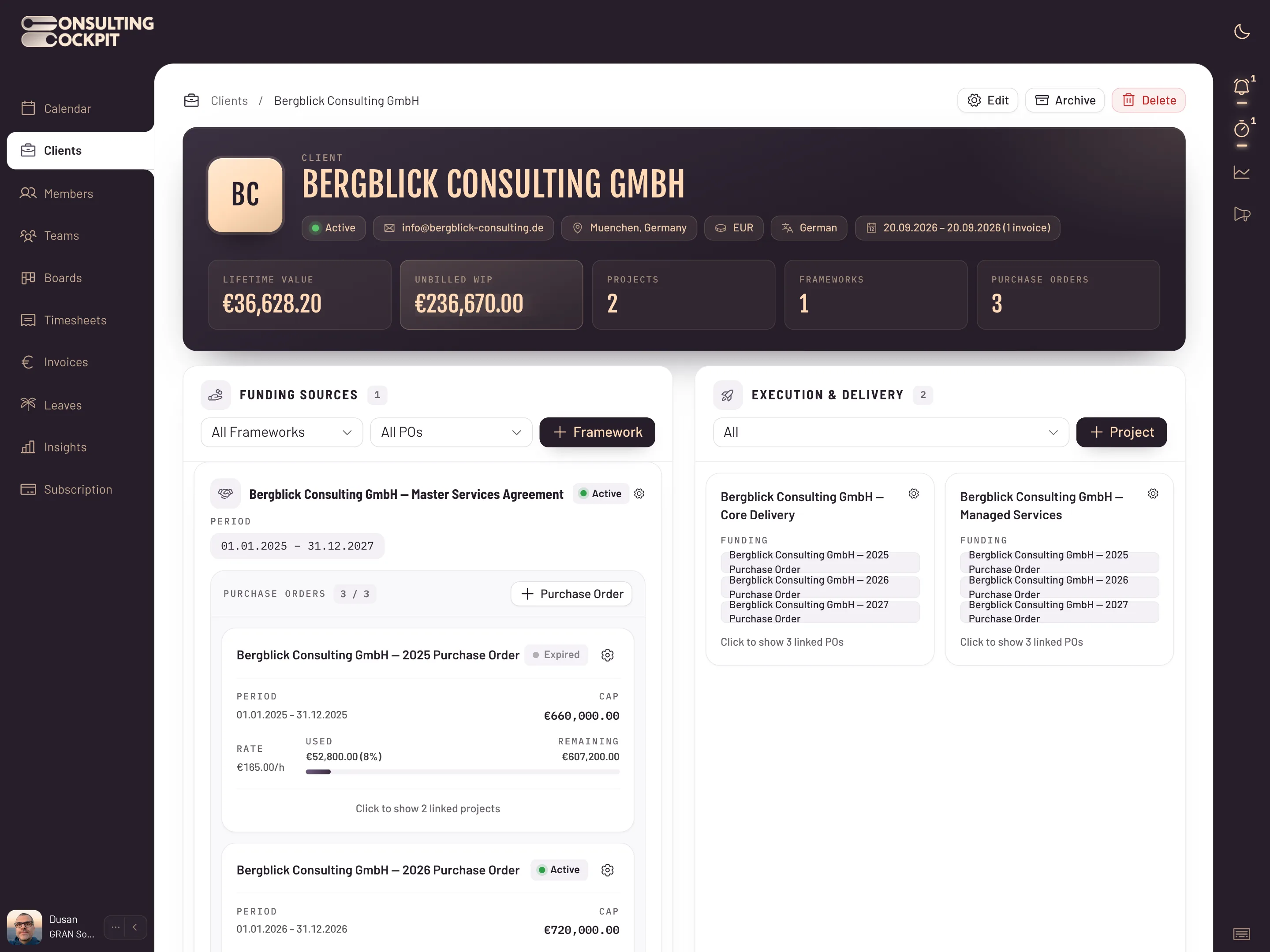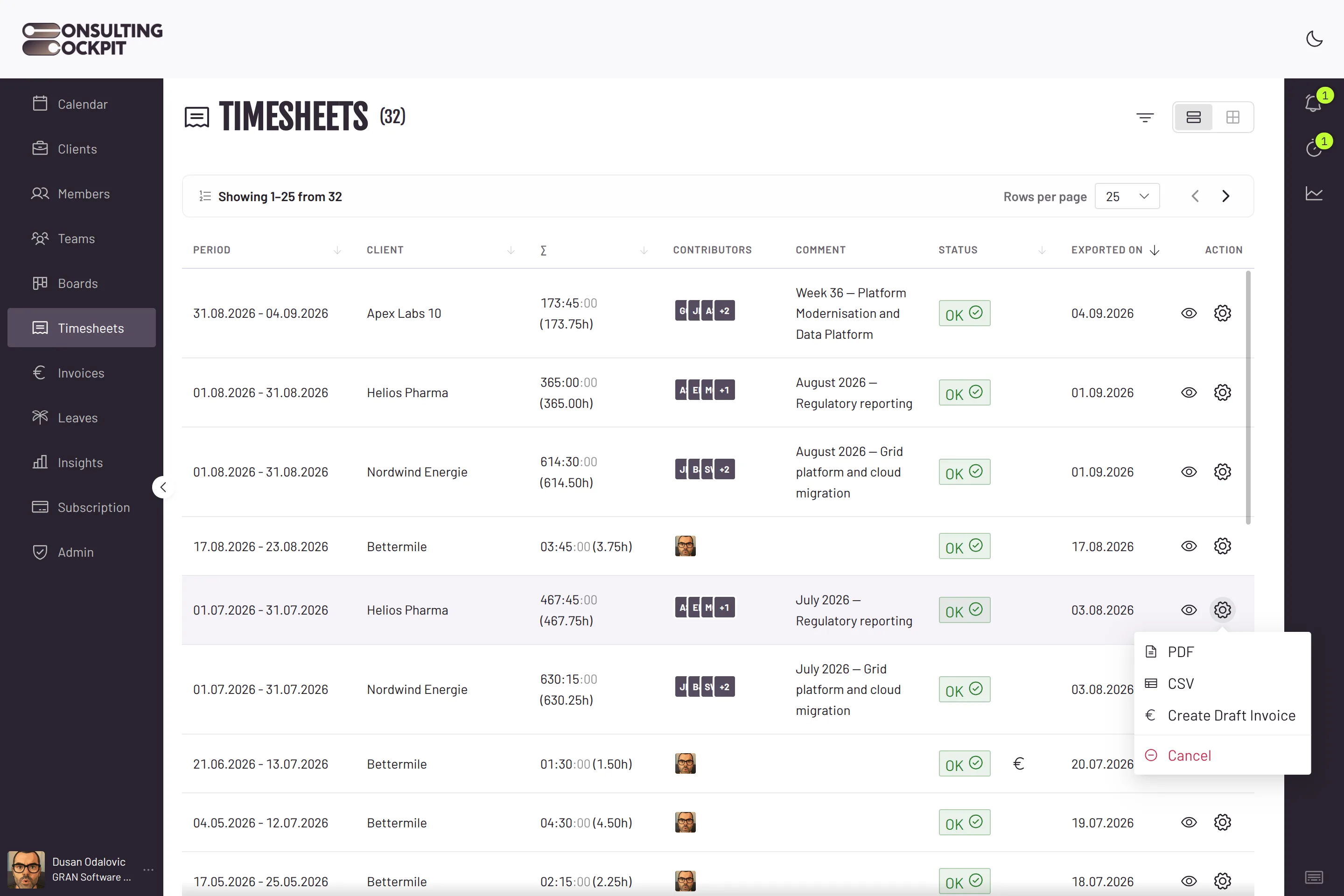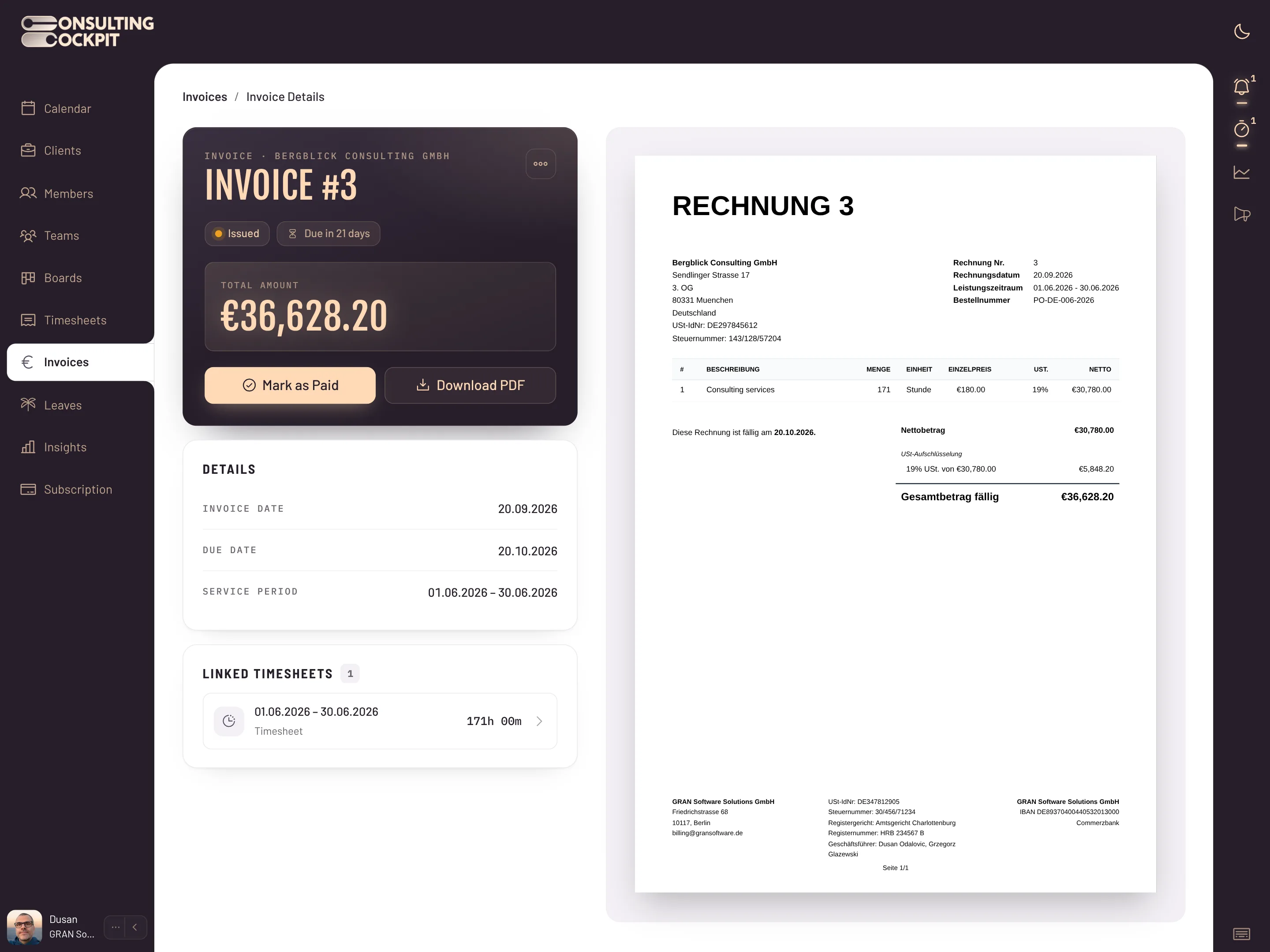
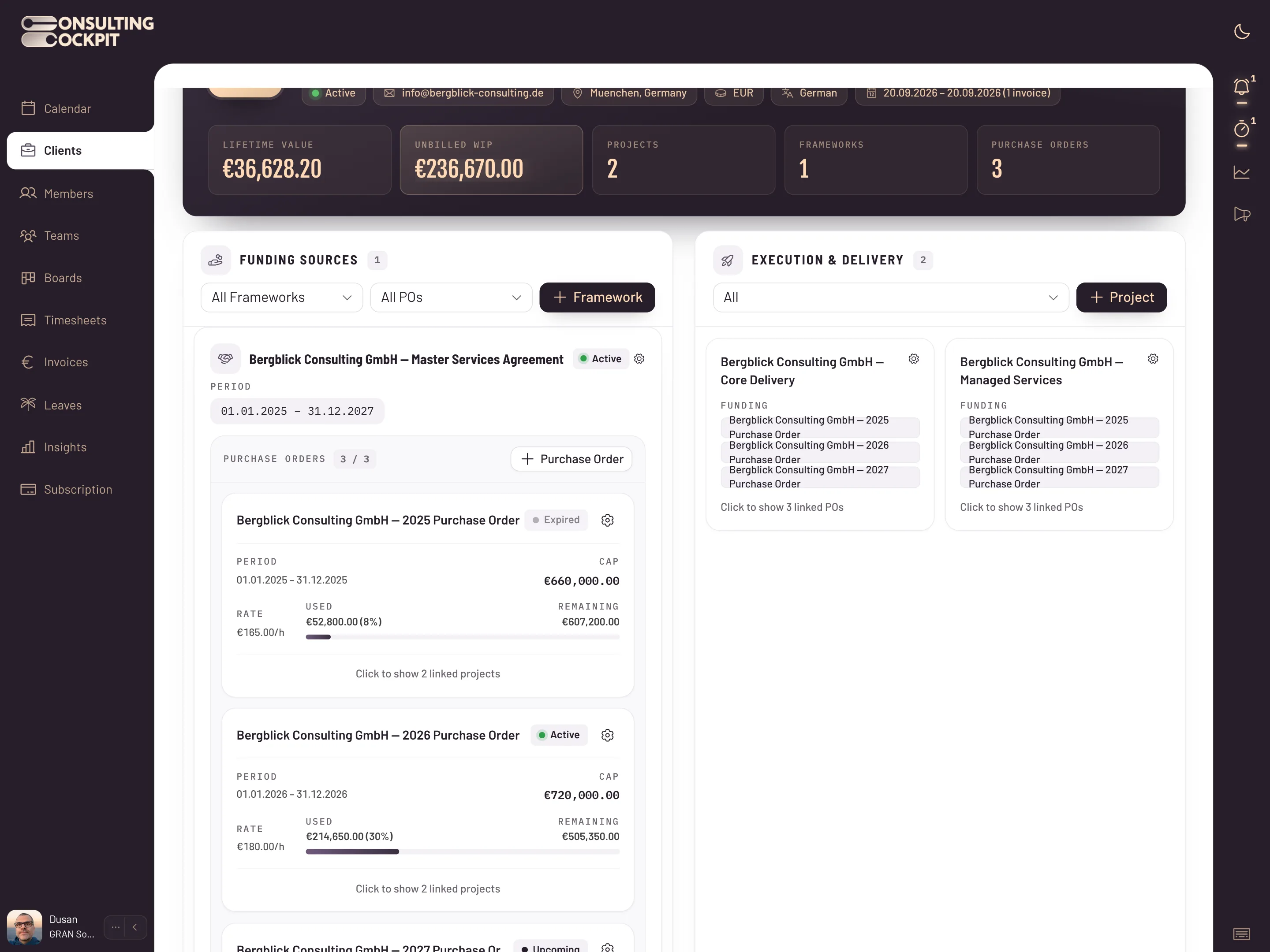
Framework agreements hold purchase orders with caps. Tracked hours draw from them automatically, with a warning before a budget is exceeded.
Hours past the PO cap are worked but not paid.
Hours and budgets are compared after the fact.
Hours cannot be traced to the PO that funded them.
The PO lives in a PDF, the hours in a spreadsheet, and someone reconciles the two at month end.
Budget tracking from framework agreement to invoice, in four steps.
Each PO stores its number, period, hourly rate, and cap.
Consultants pick a project. Entries link to the agreement and PO automatically.
Hours draw from the active PO first, then the next queued PO.
A real-time warning alerts the PM before the cap is reached.
Distributed caching and content distribution nodes mapping.
GPU accelerated Middle-out compression algorithm integration.
Legacy search indexing and data pipeline synchronization.
The warning arrives while hours are still billable.
A real-time warning fires when a PO reaches 90% of its cap.
The remaining budget is shown in billable hours at the PO rate.
When the cap is reached, the queued PO funds further work.
The agreement and the orders behind every budget sit on the client's contract, and timesheets become invoice line items at the PO rate, checked before they are sent, see Framework Agreements , Timesheet to Invoice and EN 16931 E-Invoicing
Real screens from the product — swipe or use the arrows.
The next queued PO funds the work automatically. If none exists, the project is marked No active funding.
Yes. The cap is shared across the linked projects, and the PO card shows the count.
No. They pick a project. Entries are matched to the agreement and PO automatically.
Timesheets become line items at the PO rate. Only funded hours are invoiced.
The order that ends soonest is drawn from first; with the same end date, the one that started earlier. A cancelled order counts as ending the day before its cancellation date.
Set up a framework agreement, attach a purchase order, and track against it. Free for 30 days.